Guide
Spotting a real ALPINA
Stripes, spoilers and wheels can all be bought. What makes a car a real ALPINA is its build record. Here's what to look for, and what proves it.
The golden rule
ALPINA parts have always been sold separately, so plenty of ordinary BMWs wear them. That makes a car an ALPINA-styled BMW, not an ALPINA. The difference matters: a genuine car is usually worth considerably more.
Look at the paperwork first, then the car. The VIN, the build plaque and the history file are much harder to fake than anything you can bolt on.
On the outside
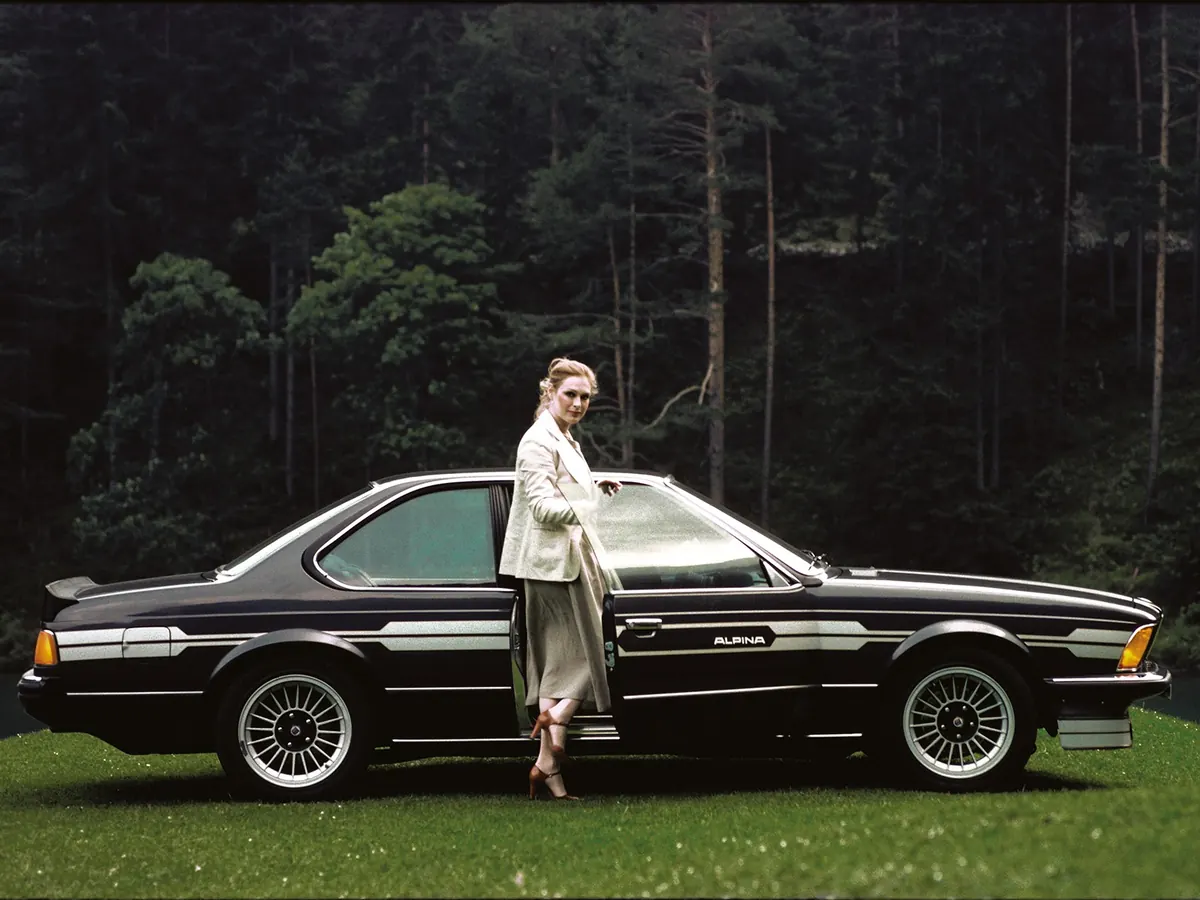
- Deco stripes. Fine pinstripes in gold or silver along the sides, often ending in the ALPINA name. They're the most famous signature, and the easiest to copy.
- 20-spoke wheels. ALPINA's "Classic" multi-spoke alloys hide the tyre valve under the centre cap. Reproductions exist, so check the castings and centre caps.
- Spoilers and badges. A deeper front spoiler, usually marked ALPINA, and often a rear lip spoiler. Look for the ALPINA script on the boot and the model name.
Inside the car
- The numbered plaque. Every ALPINA carries a metal plaque recording its production number. Its position varies by model. A car with no plaque, or one that looks newer than the car, needs explaining.
- Blue and green trim. Many ALPINAs have blue-and-green stitching on the steering wheel or seats, and ALPINA-specific instruments.
- Switch-Tronic buttons. On automatic cars from the 1990s onwards, gear-change buttons on the steering wheel are a strong clue on the right models. See the glossary.
Numbers and paperwork
In 1983 the German authorities recognised ALPINA as a car manufacturer. From then on, ALPINAs were registered with their own manufacturer code.
- From 1983: two VINs. The car keeps the BMW number of its base car (starting
WBA) and gains an ALPINA number startingWAP. The registration documents should show ALPINA as the manufacturer. - Before 1983: BMW numbers only. Earlier cars were officially converted BMWs, so they carry a BMW VIN. Proof depends on the plaque and documents from the time.
- The build record. The ALPINA archive in Buchloe can confirm what a car was built as. Ask the seller if they've requested this. If not, ask for the WAP or production number and request it yourself.
A note on "conversion" cars. In the 1970s and early 1980s, some cars were converted by ALPINA dealers using genuine ALPINA kits. They're legitimate parts of the story, but they're not the same as a car built in Buchloe, so they're usually valued differently.
Quick checklist
- Registration documents name ALPINA as the manufacturer (1983 onwards)?
- A WAP number on the car that matches the documents?
- A numbered plaque that looks original to the car?
- Confirmation of the build from ALPINA's archive?
- Engine and specification matching the model page for that year?
- History that covers the car's whole life, not just its recent years?